Power of the "$": How Currency Symbols Quietly Change What People Spend
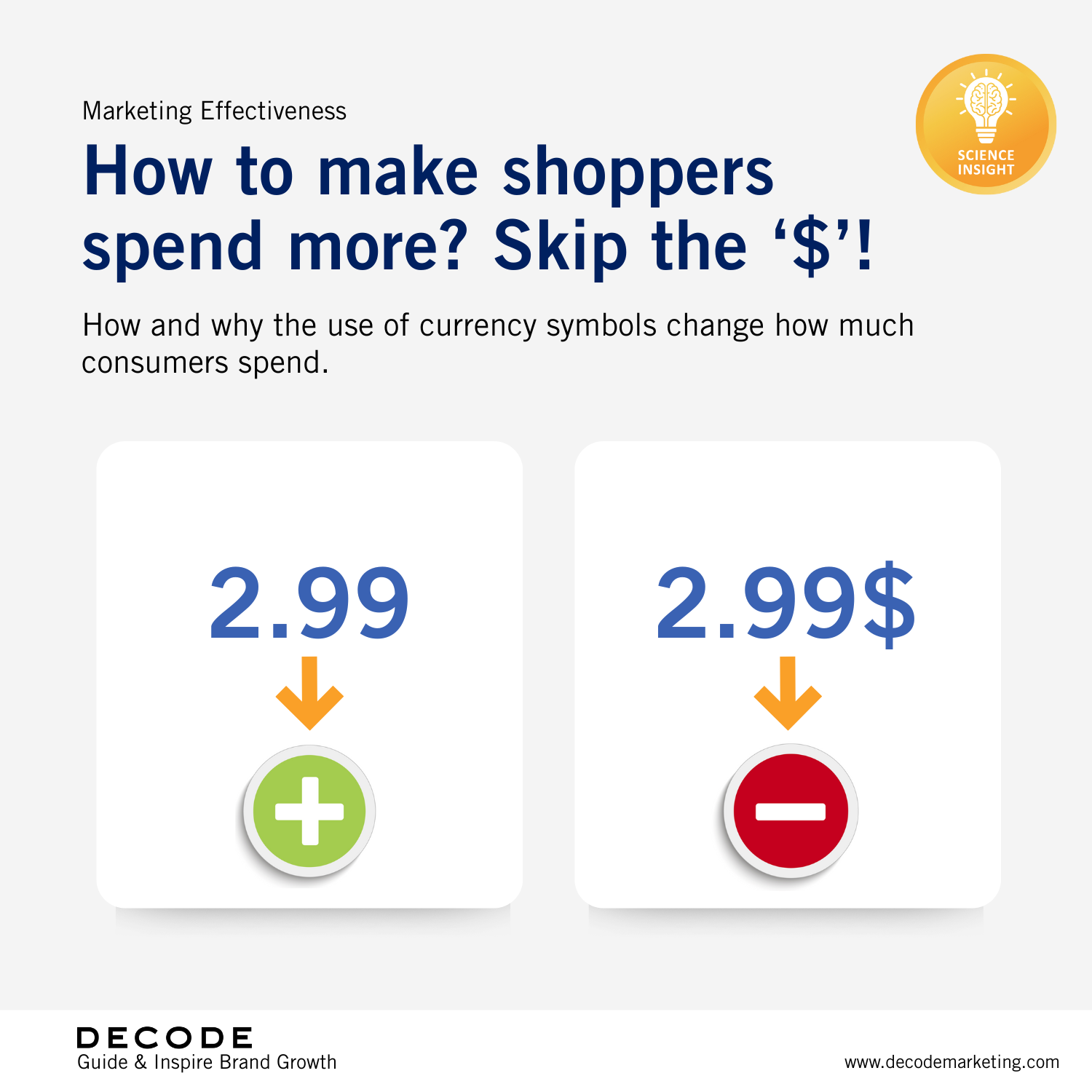
How comes removing the dollar sign from your menu prices can increase spending by up to 8%. Neuroscience reveals why this tiny change wields enormous power over purchase decisions, profitability and revenue.
The “Pain of Paying”
When you see a product you want, your brain initiates a rapid-fire cost-benefit analysis. Knutson and colleagues' landmark 2007 study using fMRI brain imaging revealed the neural mechanics of this process:
The reward system (nucleus accumbens) activates when you see desirable choice, flooding you with anticipatory wanting. When you see the price tag, the insula fires up. The insula is your brain's general "this is bad" alarm system. It activates during physical pain, social rejection, unfair offers, risk and uncertainty or financial losses.
Here's the point: prices displayed with currency symbols trigger insula activation significantly stronger. Your brain processes "$28" differently than "28". The number is just a number. The currency symbol makes the financial loss more tangible and with that, more painful.
They serve as cognitive stop signs, forcing your brain to consciously process the transaction as a loss. Remove them, and the payment becomes more abstract – just numbers on a screen rather than money leaving your pocket. The general fact that consumers spend more when payment transparency decreases (e.g. credit cards vs. cash) is based on the same principle: the pain is not tangible (Soman 2003).
Remove the currency symbol – reduce the pain.
Thomas, Desai, and Seenivasan (2011) found that removing monetary cues particularly increased purchases “vice” products – indulgent choices people normally restrain themselves from buying. The currency symbol acts as a self-control mechanism; remove it, and impulse wins.
The positive effect on spendings has been shown in many contexts. Cornell's menu engineering studies showed that removing dollar signs increased average check sizes by 8.15%. Spelling out "dollars" performed worst, while no symbol performed best.
Plassmann et al. (2007) demonstrated that pricing presentation modulates the interaction between the value calculation of a choice. Minimalist price displays reduced pain signals leading to increasing conversion rates.
Bagchi and Block (2011) found that framing prices without symbols increased immediate sign-ups for recurring services.
The list goes on and on.
Bottom Line: skip the currency symbol whenever possible
Currency symbols are neural warning signals that activate our brain's pain centers. Every currency sign creates a micro-moment of purchase hesitation.
The question isn't whether currency symbols affect purchase decisions—it's whether you're using that knowledge to create a better buying experience.
Start small, test rigorously, and let neuroscience guide your pricing strategy. Your conversion rates will thank you.
=> 𝘿𝙀𝘾𝙊𝘿𝙀 𝙊𝙛𝙛𝙚𝙧𝙞𝙣𝙜: 𝙎𝙝𝙤𝙥𝙥𝙚𝙧𝙢𝙖𝙧𝙠𝙚𝙩𝙞𝙣𝙜 𝙋𝙡𝙖𝙮𝙗𝙤𝙤𝙠 & 𝙏𝙧𝙖𝙞𝙣𝙞𝙣𝙜 to improve profitability and sales at the (e)POS
References
Bagchi, R., & Block, L. (2011). Chocolate cake, now or later? The effect of monetary framing on immediate consumption. Journal of Consumer Research, 38(5), 804–819.
Plassmann, H., O'Doherty, J., & Rangel, A. (2007). Orbitofrontal cortex encodes willingness to pay in everyday economic transactions. Journal of Neuroscience, 27(37), 9984–9988.
Prelec, D., & Loewenstein, G. (1998). The red and the black: Mental accounting of savings and debt. Marketing Science, 17(1), 4–28.
Thomas, M., Desai, K. K., & Seenavasin, S. K. (2011). How credit card payments increase unhealthy food purchases: Visceral regulation of vices. Journal of Consumer Research, 38(June), 126–139.
Soman, D. (2003). The effect of payment transparency on consumption: Quasi-experiments from the field. Journal of Consumer Research, 30(2), 144–155.